Why Shirodhara Calms Modern Neurological Stress
4 min read
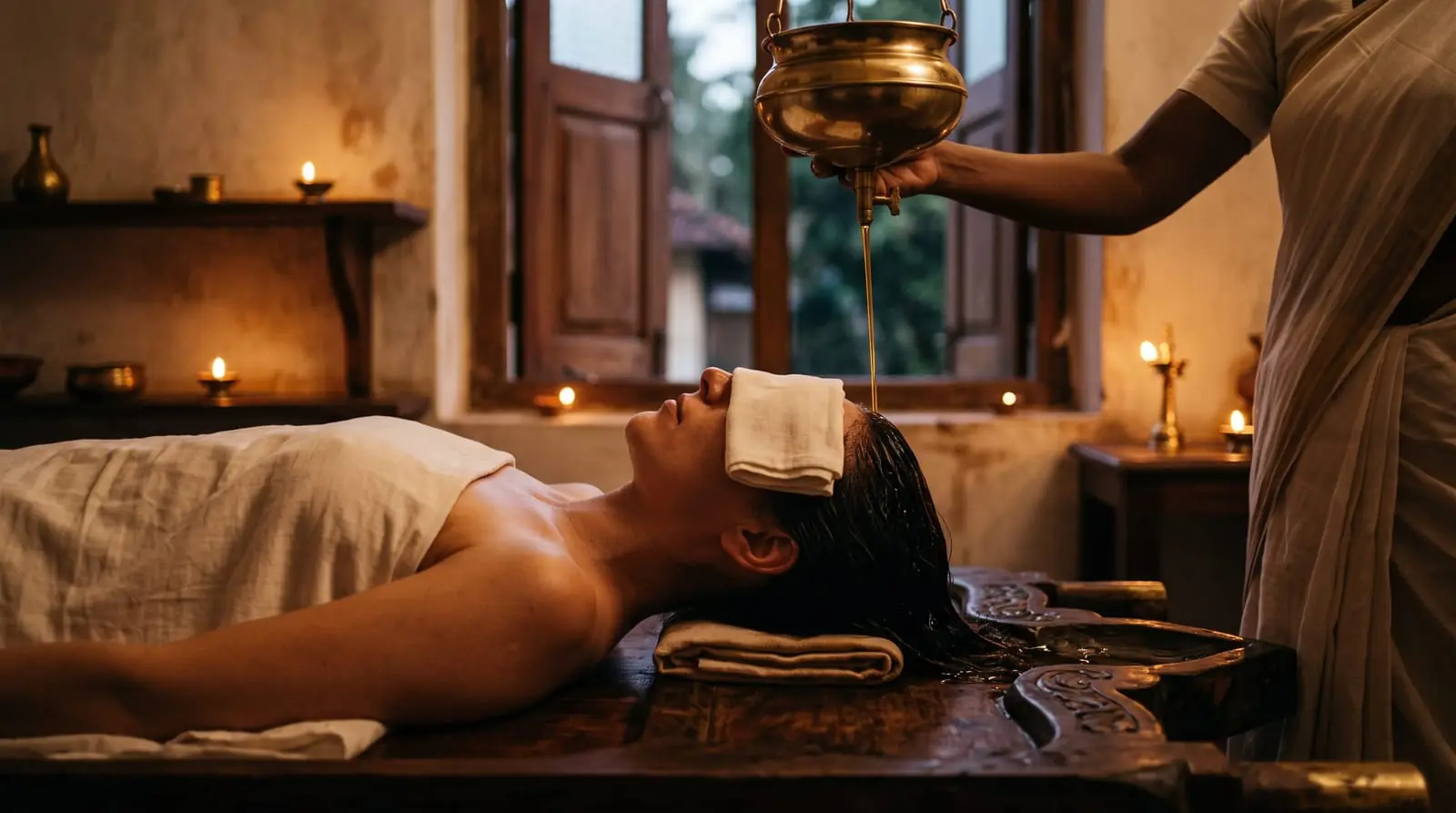
Shirodhara takes its name from shiro, the head, and dhara, a flow. The patient lies on a wooden droni bed while warm medicated oil is poured in a thin, unbroken stream across the forehead for the length of the session.
It is one of the most requested therapies at our center, and the reason is the lives our patients lead: long screen hours, short sleep and a mind that does not switch off at night.
The stream is steady, warm and unhurried. For many patients it is the first time in months that the mind has been given nothing to do.
Classical texts describe Shirodhara as calming Vata and Pitta in the head. In practice, patients most often report that they fall asleep more easily, that tension headaches come less often, and that a background sense of anxiety eases over a course of sessions.
The oil matters as much as the stream. After the pulse examination the physician chooses it for you; Brahmi oil, Ksheerabala 101 and Chandanadi are among those we use. Temperature and duration are set for your constitution as well.
What happens in a session
- A pulse examination first, so the oil, its warmth and the length of the session suit you.
- A short head and shoulder massage to settle the body on the droni bed.
- The oil stream itself, moved slowly across the forehead; a session lasts about 60 minutes.
- Twenty minutes of rest afterwards, so the oil can be absorbed before you wash.
Who should ask the physician first
Shirodhara is gentle, but it is not for everyone on every day.
- Anyone with a fever, a cold or an active sinus infection.
- Women in the later months of pregnancy.
- Anyone with a recent head or neck injury, or a skin condition on the scalp or forehead.
- Anyone taking medicine for blood pressure, sleep or mood: bring the prescription to your consultation.
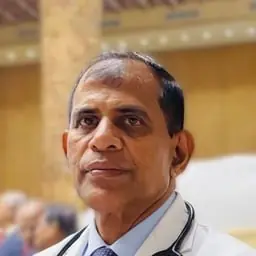
Dr. Sarath Wimalagunasekara
Founder, Chief Ayurvedic Medical Officer
Dr. Sarath graduated with clinical honours from the Institute of Indigenous Medicine at the University of Colombo. Over 28 years he has treated more than 15,000 local and international patients, and he personally oversees every Panchakarma protocol and herbal formulation prepared at the dispensary.
