The Science of Panchakarma: Cellular Cleansing
6 min read
Panchakarma means "five actions". It is the classical Ayurvedic method of purification, and it is a medical treatment rather than a spa ritual: a physician decides whether you need it, which of the procedures suit you and how long the course should run.
The aim is simple to state. When digestion is weak, food and experience are only partly processed, and the residue, which Ayurveda calls Ama, collects in the tissues. Panchakarma loosens that residue, moves it to where the body can expel it, and then rebuilds the digestive fire, Agni, so that it does not return.
Purification is only half of Panchakarma. The other half is restoring the digestive fire, so that the body stops making Ama in the first place.
At Ayur Jeewaka a cycle always begins with Nadi Pariksha, the radial pulse examination, together with a review of your tongue, your history and any medicines you already take. Western prescriptions are never stopped abruptly; the plan is built around them.
Not every patient needs all five procedures. Most courses use two or three of them, chosen for your constitution and for the season, and every session takes place under the supervision of a registered Ayurveda doctor.
The five classical procedures
The classical texts describe five main actions. Your physician selects from them; they are never applied as a fixed package.
- Vamana: therapeutic emesis, used for conditions of excess Kapha.
- Virechana: medicated purgation, used for conditions of excess Pitta.
- Vasti: medicated enema with decoctions or oils, the principal treatment for Vata.
- Nasya: medicated oils or powders given through the nose, for the head, sinuses and neck.
- Raktamokshana: purification of the blood, used selectively and only where clearly indicated.
What a supervised cycle involves
A cycle moves through three phases. How many days each one takes depends on your strength and on how you respond.
- Preparation: internal and external oleation (Snehana) followed by herbal steam (Swedana) to loosen Ama and bring it to the digestive tract.
- Main procedure: the purification chosen for you, given at the center on the day your physician judges you ready.
- Recovery: a graduated diet (Pathya) that rebuilds Agni step by step, with rejuvenating Rasayana preparations to consolidate the result.
- Follow-up: a repeat pulse examination to confirm the result and to set your routine for the months ahead.
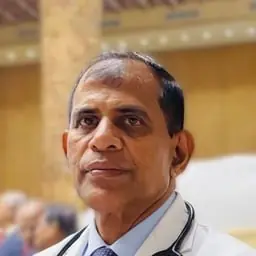
Dr. Sarath Wimalagunasekara
Founder, Chief Ayurvedic Medical Officer
Dr. Sarath graduated with clinical honours from the Institute of Indigenous Medicine at the University of Colombo. Over 28 years he has treated more than 15,000 local and international patients, and he personally oversees every Panchakarma protocol and herbal formulation prepared at the dispensary.
