What to Expect at Your First Ayurvedic Consultation
4 min read
If you have never visited an Ayurveda doctor, the first appointment can feel unfamiliar. There are no machines and few forms. Instead the doctor spends time looking, listening and feeling the pulse at your wrist.
This guide walks through a first consultation at Ayur Jeewaka in Minuwangoda step by step, so you know what will happen, what to bring and what you will leave with.
The pulse tells the doctor where to look. Your own account of your health tells the doctor what matters to you.
The centre of the visit is Nadi Pariksha, the classical pulse examination. The doctor places three fingers on the radial artery at your wrist and reads the quality of the pulse under each. It is painless and takes only a few minutes, and it is always read together with the rest of the examination, never on its own.
The aim is to understand two things: your Prakriti, the constitution you were born with, and your Vikriti, the imbalance you have now. Treatment is the plan for closing the gap between them.
Before you come
- Bring recent medical reports, scans and blood test results if you have them.
- Bring a list, or the packets, of all the medicines and supplements you take.
- Avoid a heavy meal, tea or coffee for about an hour beforehand, as they can alter the pulse.
- Wear comfortable clothing that lets the doctor examine the affected area.
- Note down your main symptoms and when they started, so that nothing is forgotten.
What happens during the consultation
- Conversation: your main complaint, medical history, digestion, sleep, appetite and daily routine.
- Pulse examination: Nadi Pariksha at the wrist.
- Physical examination: tongue, eyes, skin and the affected joint or area.
- Constitution mapping: the doctor explains your Prakriti and your present imbalance across Vata, Pitta and Kapha.
- Plan: the doctor explains what is recommended, why, and how long it is likely to take.
What you leave with
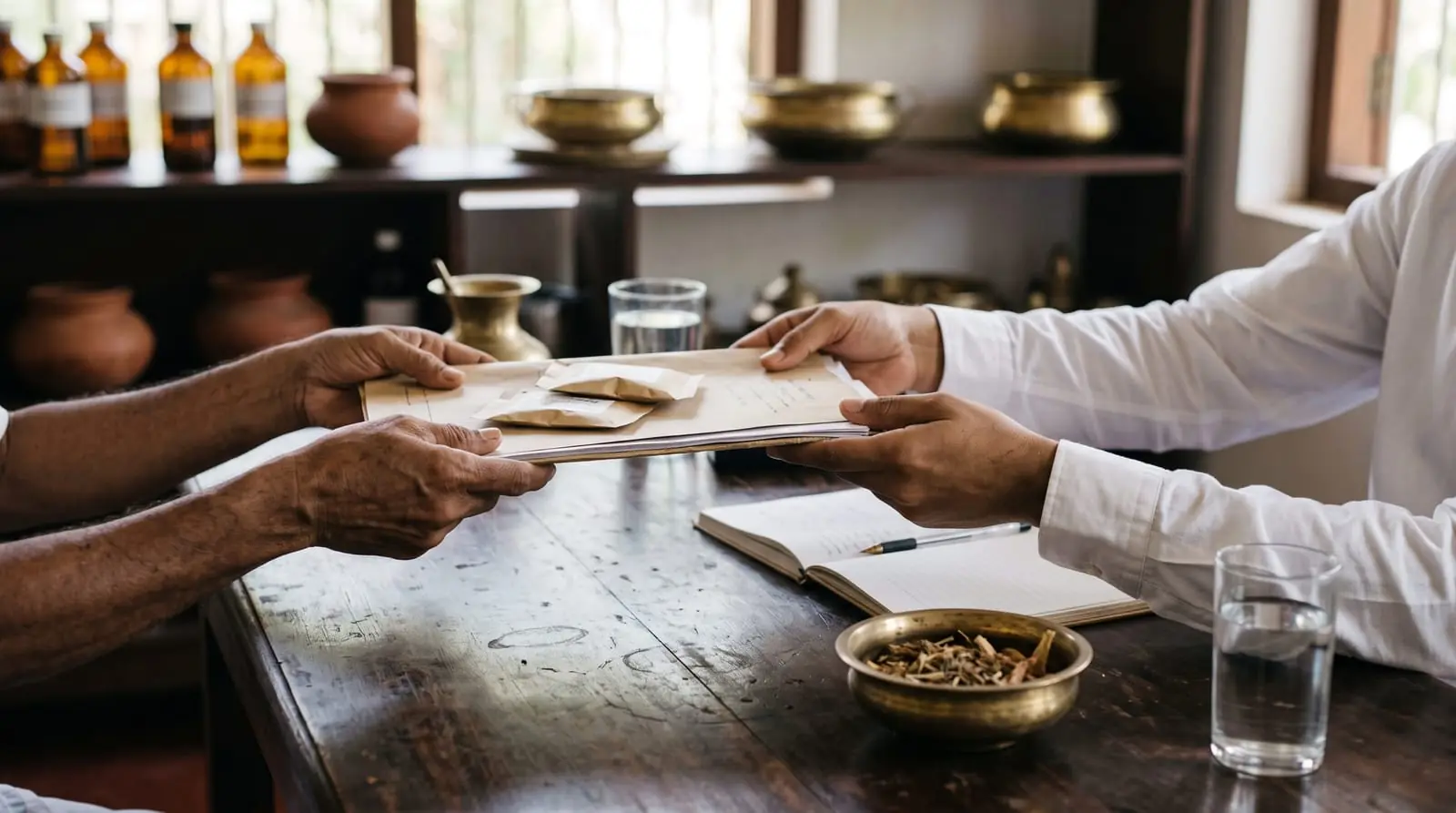
- A prescription of herbal medicine, such as a decoction (Kashaya), an Arishta, a powder or an oil, prepared at our own dispensary.
- Dietary guidance suited to your constitution.
- Advice on daily routine, sleep and exercise.
- If it is indicated, a schedule for therapies such as Abhyanga, Shirodhara or Panchakarma.
- A date for your follow-up visit.
How Ayurveda works alongside your other treatment
You do not have to choose between systems. Our doctor reviews your existing prescriptions and plans Ayurvedic treatment around them, and Western medicines are never stopped abruptly. If an examination suggests something that needs hospital investigation, you will be told so plainly.
Booking and opening hours
Our center is at 117 Veyangoda Rd, Minuwangoda 11550. It is open every day, with a morning session (8:30 - 11:30 AM) and an evening session (4:30 - 8:30 PM). You can book through the form on our contact page, by phone or by WhatsApp on +94 74 2939 239. Patients who cannot travel can ask for a home visit instead.
Frequently asked questions
How long does a first Ayurvedic consultation take?
A first visit takes longer than a follow-up because the doctor takes a full history. Allow up to an hour.
Is pulse diagnosis painful?
No. The doctor rests three fingers lightly on your wrist. There are no needles and nothing invasive.
Do I need to fast before the appointment?
No. Simply avoid a heavy meal, tea or coffee in the hour before, and come rested if you can.
Will I have to stop my current medicines?
No. Bring them with you. Ayurvedic treatment is planned around your existing prescriptions, and you should not stop any prescribed medicine on your own.
Can elderly patients be seen?
Yes. Treatment is adjusted for age and strength, and elderly or bedridden patients can also be seen at home.
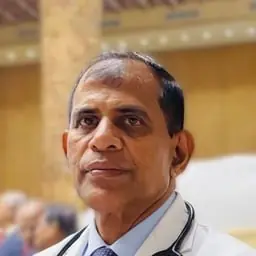
Dr. Sarath Wimalagunasekara
Founder, Chief Ayurvedic Medical Officer
Dr. Sarath graduated with clinical honours from the Institute of Indigenous Medicine at the University of Colombo. Over 28 years he has treated more than 15,000 local and international patients, and he personally oversees every Panchakarma protocol and herbal formulation prepared at the dispensary.
